Meet the Champions
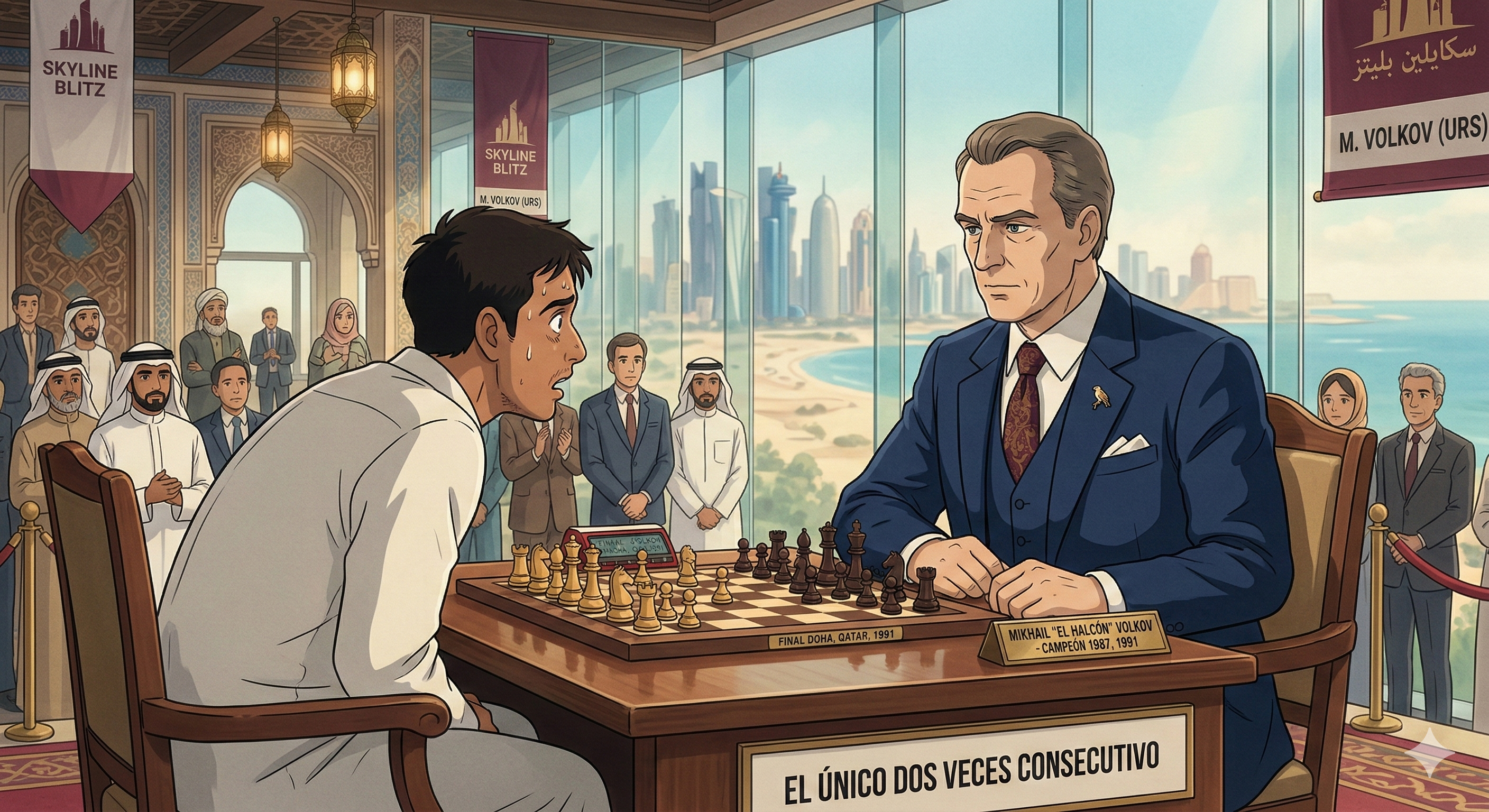
Nia Okafor (Nigeria) – The Queen of Lagos
Age: 26 | Style: Explosive tactical (specialist in the African Attack 1.e4 e6 2.d4 d5 3.Nc3) | Interests: Social activism, Afrobeat music, traditional Yoruba dance.
Born in the vibrant neighbourhoods of Lagos, Nia discovered chess at the age of 9 in a
community centre where her mother worked as a nurse. Her first board was handmade from
cardboard and bottle caps, but her talent was impossible to contain. At 15, she surprised
everyone by defeating the Nigerian national champion in a simultaneous match, using a bold
gambit that later became known as ‘Nia's Sacrifice’. Today, in addition to competing, she runs
‘Chess in the Slums’, a project that uses chess to teach mathematics and critical thinking to
marginalised children. Fun fact: He has a tattoo of a pawn being crowned, symbolising his
philosophy: ‘The humble can go far.’
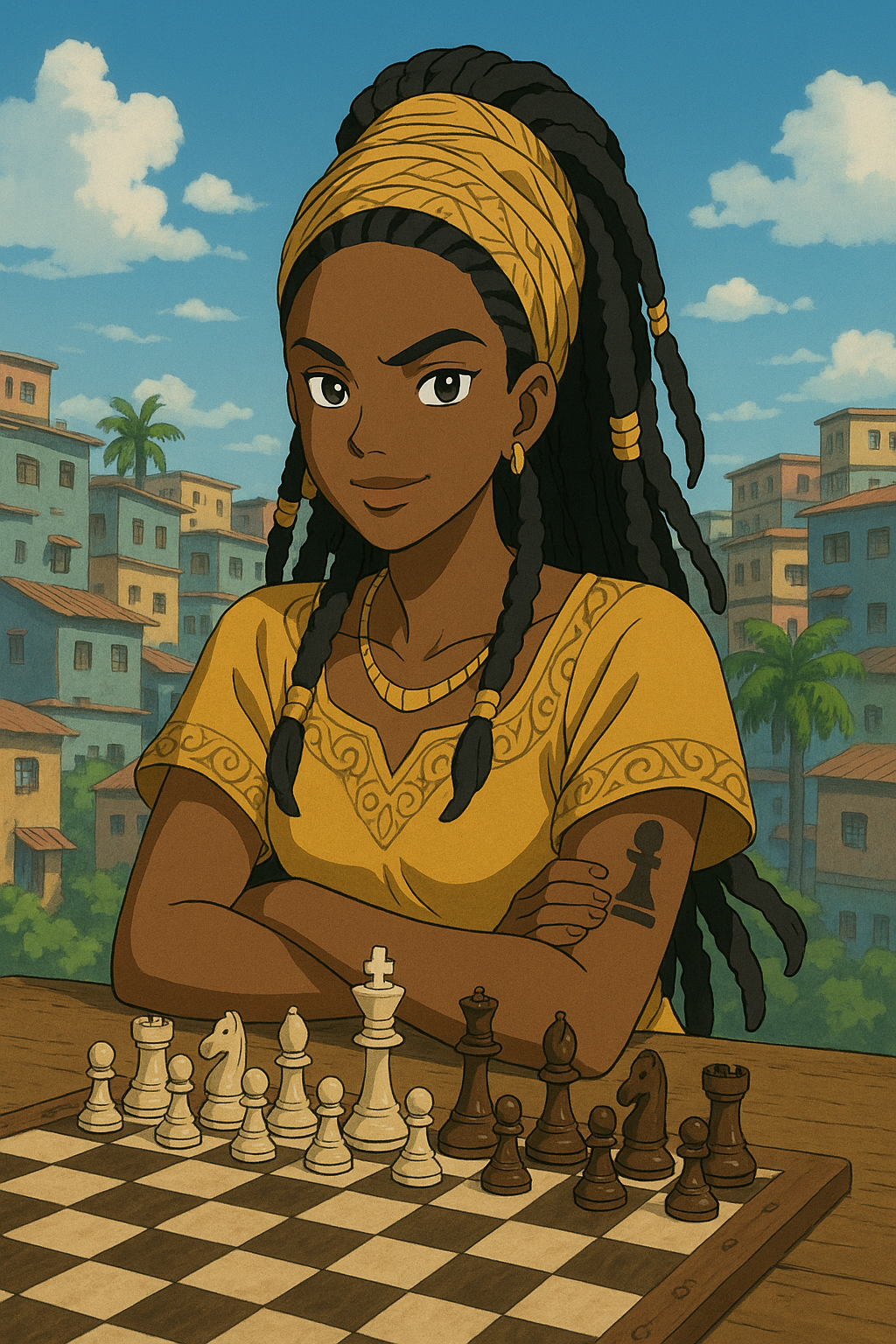
Linh Wang (China) – The Tea Strategist
Age: 31 | Style: Positionally precise play (Baltic Defence) | Interests: Tea ceremony, Tang poetry, collecting antique chessboards.
The only child of university professors in Shanghai, Linh was raised under the discipline
of the classics. She learned chess at age 5 as a mathematical exercise, but fell in love
with the art. Her methodical style – where each piece flows like brushstrokes on a
canvas – led her to become the first woman to win the Beijing Open. Between tournaments,
she writes an anonymous blog, ‘The Way of the 36 Strategies,’ where she relates chess to
Chinese philosophy. Secret: She always keeps a go stone in her bag, a gift from her
grandfather, to remind her that ‘The real opponent is oneself.’
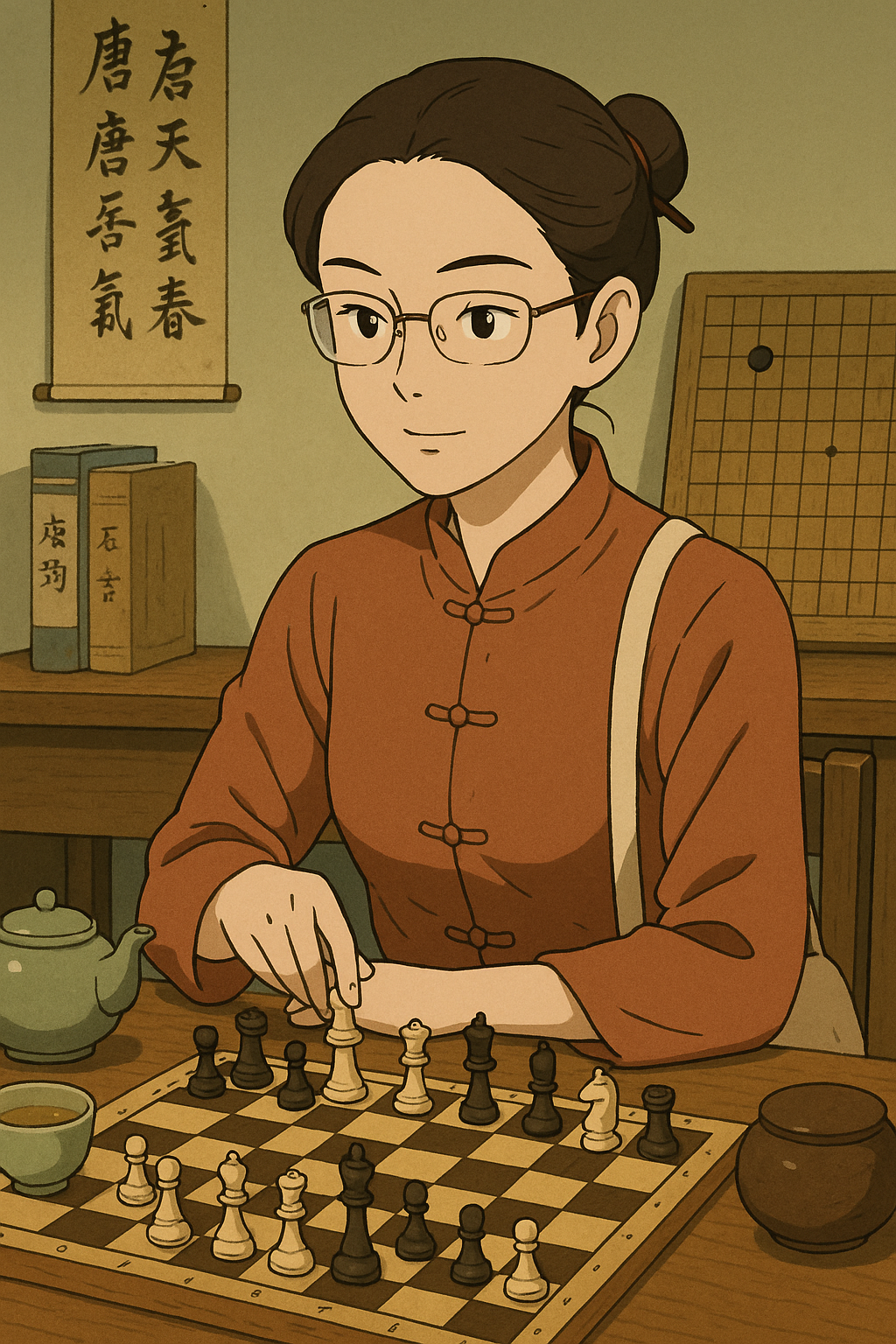
Valentina & Rafael Rivas (Colombia/Argentina) – The Kings of the River
Age: 24 | Styles: Valentina = Alekhine Attack; Rafael = Petrov Defence | Interests: Tango, history of chess in cafés, political debates.
Born on the cultural border of Leticia (Colombia), the Rivas grew up between the murmur
of the Amazon and street chess in Buenos Aires. Valentina, explosive and creative, plays
as if she were dancing a tango: with passion and unexpected twists. Rafael, on the other
hand, is a student of the Soviet school, capable of defending impossible positions. Their
sibling rivalry is legendary: in the 2022 Pan American Championship, Valentina defeated
him with a pastor mate in 12 moves, but Rafael took revenge by winning the tiebreaker
match in the finals.

Arjun Sharma (India) – The Silicon Guru
Age: 29 | Style: Hypermodern with touches of Caissa (Nimzo-Indian Defence) | Interests: Artificial intelligence, vipassana meditation, vegan cooking.
A former programmer from Bangalore, Arjun gave up a six-figure salary at an international
company to pursue his dream: chess. His play seems slow until, like the god Shiva, he
destroys plans with disruptive moves. He trains using a unique method: he studies games
under the controlled effects of ayahuasca, seeking to ‘see the board as a whole’.
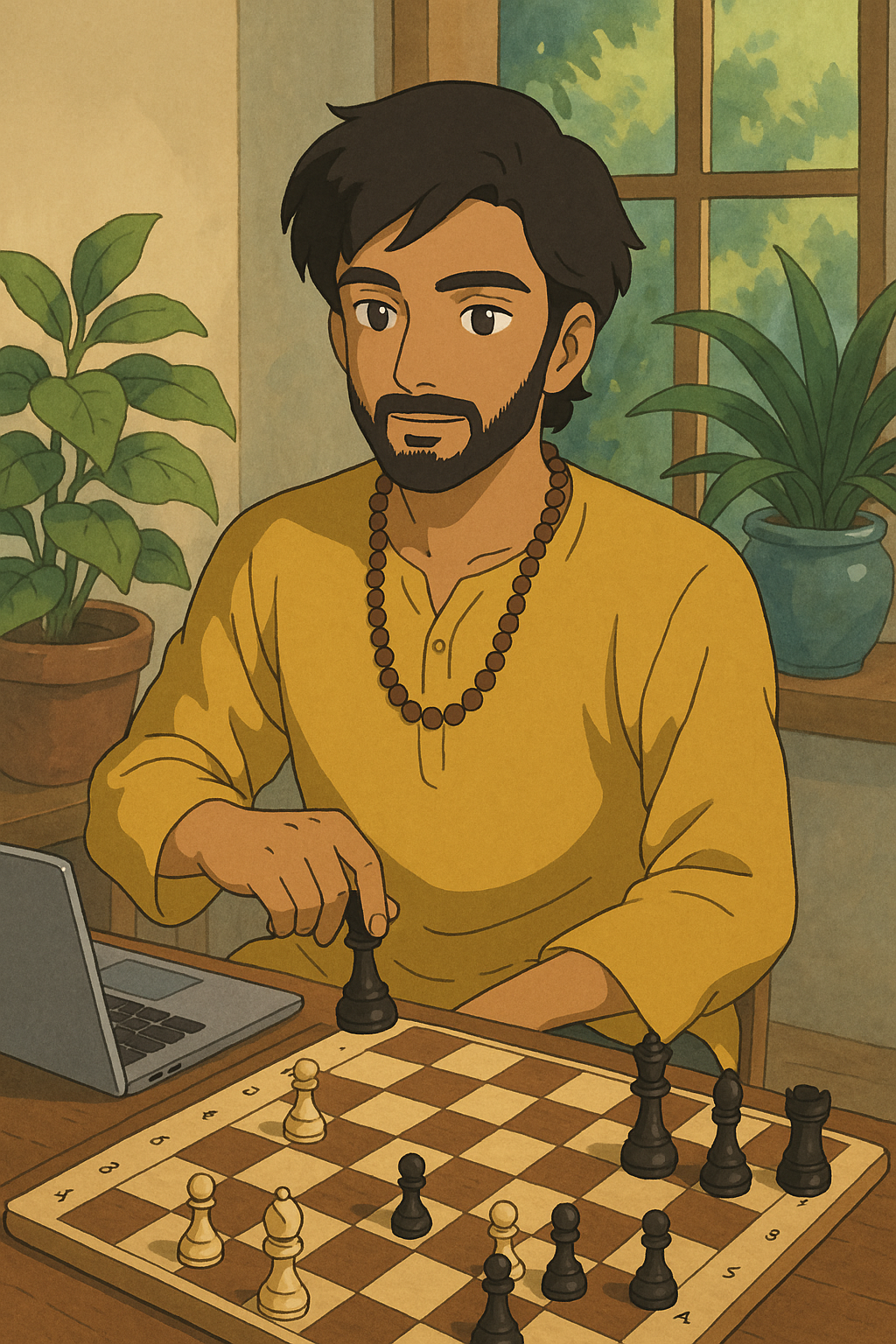
Lorenzo Oliveira (Portugal/Spain) – The Poet of the Board
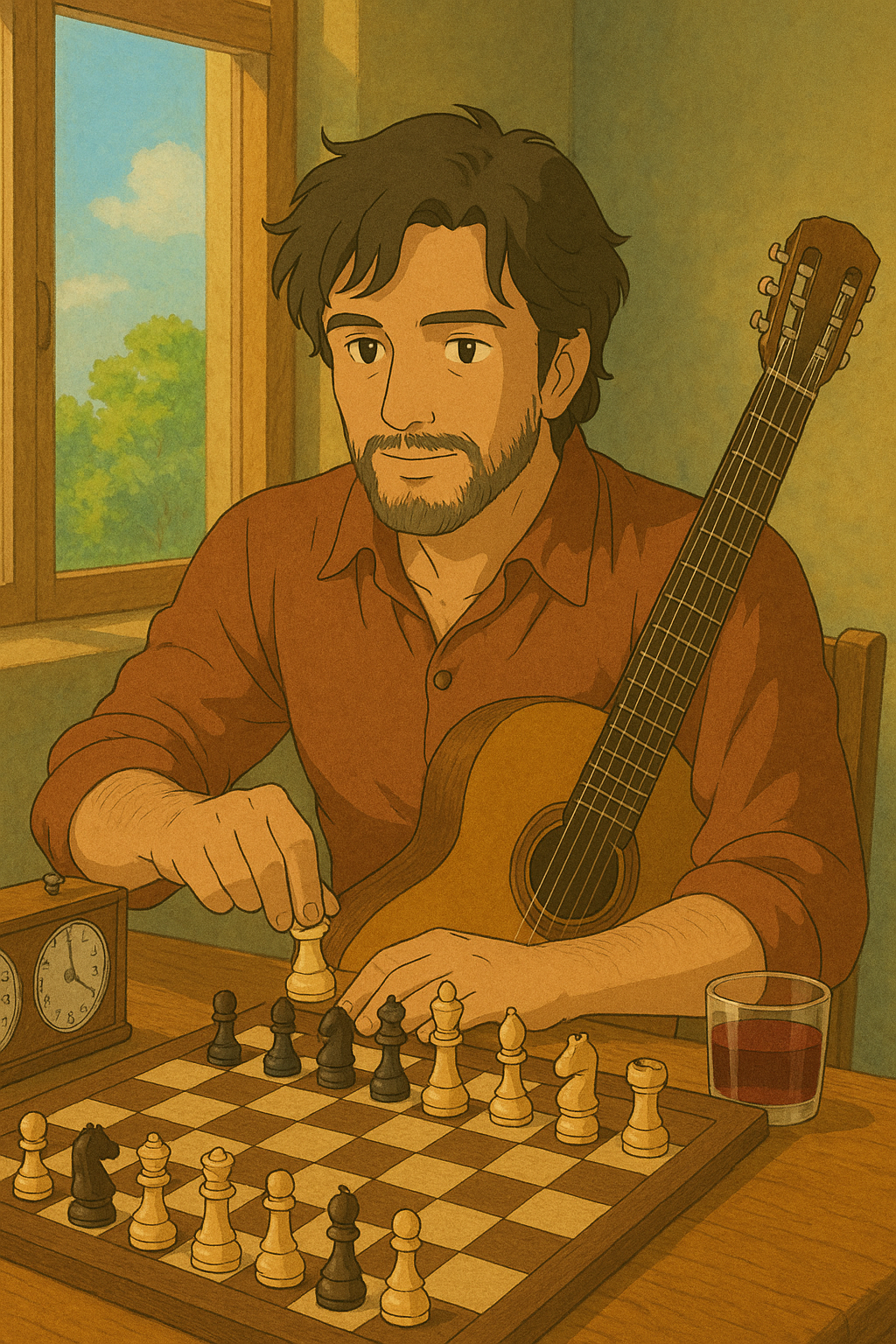
Age: 37 | Style: Iberian Romanticism (King's Gambit Accepted) | Interests: Flamenco guitar, oenology, writing sonnets.
The son of a fisherman from the Algarve and a flamenco dancer from Seville, Lorenzo
learned chess in the taverns of Lisbon, where the old masters taught him that ‘Every
game must tell a story.’ He is the last romantic: he sacrifices queens for beauty, not
calculation. His games are studied for their artistic value. Ritual: He drinks a glass
of port before playing, and if he loses, he burns the scoresheet and writes a poem with
the ashes.
Kofi Mbeki (South Africa) – The Lion of Johannesburg
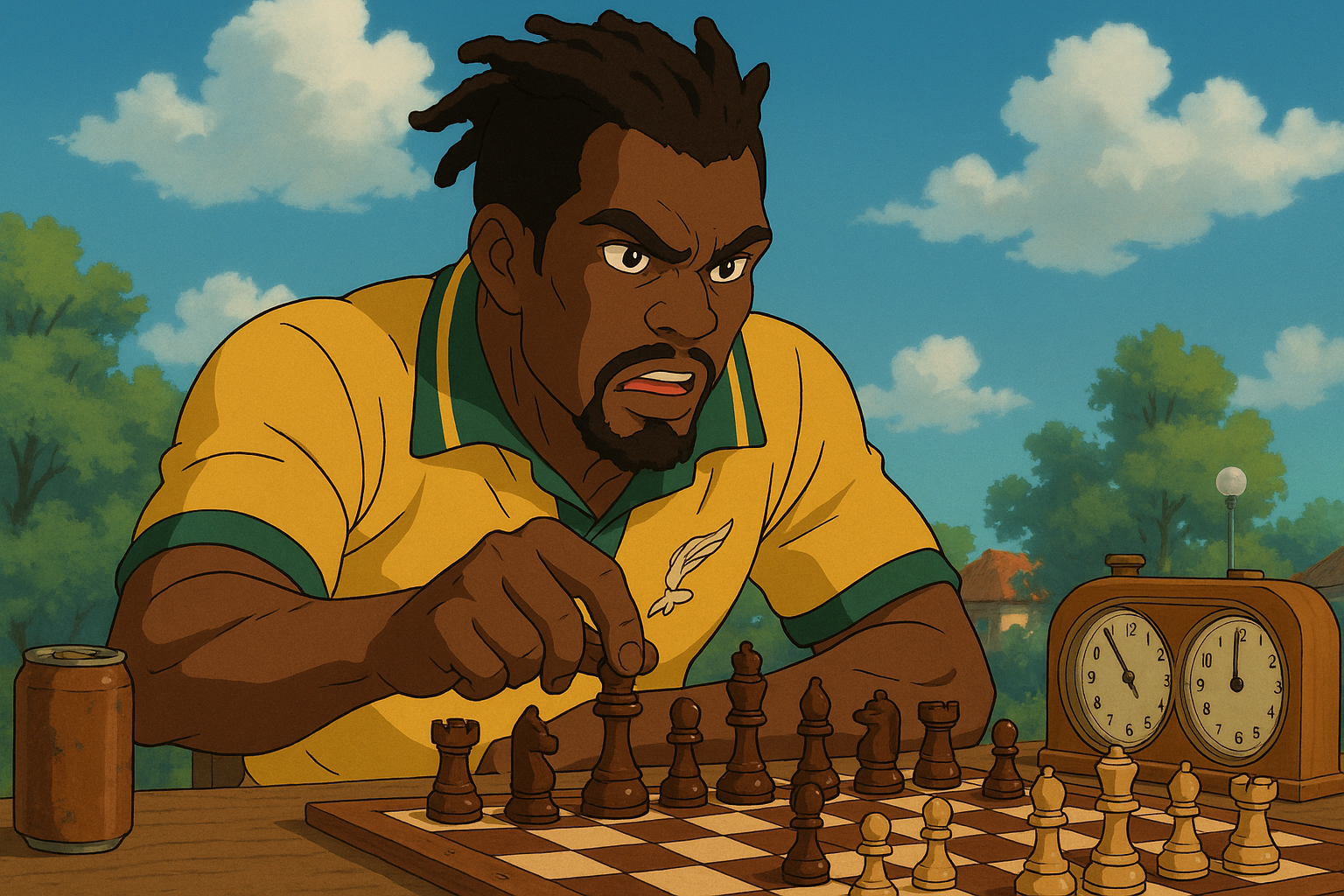
Age: 32 | Style: African Gambits (Zulu Attack: 1.e4 e5 2.f4 exf4 3.Nf3 g5 4.h4) | Interests: Jazz, rugby.
He grew up in Soweto playing chess with beer cans as pieces. His style is pure energy: he
attacks like a Kalahari storm, even in lost positions. He was discovered by a Russian GM
during a charity tournament, who nicknamed him ‘The Lion of Johannesburg’. Today he uses
his fame to promote school leagues in townships. Irrational phobia: He is terrified of
digital clocks; he insists on using analogue clocks.
Liam Bennett (New Zealand) – The Māori Warrior
Age: 27 | Style: Modern-traditional fusion (Kiwi Opening: 1.g4) | Interests: Pounamu wood carving, Māui legends, surfing.
A descendant of Ngāpuhi warriors, Liam applies concepts from the haka to chess: ‘The
board is a battlefield, and each piece has a mana (spirit).’ His innovative
‘Albatross Defence’ (1.d4 f5 2.g4) has baffled grandmasters. He trains on isolated
beaches, imagining the waves as enemy attacks. Goal: To be the first GM to win a
tournament wearing a korowai (traditional cloak).

Paweł Kowalski (Poland) - The Tank
Age: 25 | Style: Solid positional play, specialist in Slav defences and rook endgames | Interests outside chess: Military history, collecting replicas of medieval armour, and hiking in the Tatra Mountains.
Paweł was born in Poznań to a family of engineers who viewed chess as a mere
hobby. He was Polish youth champion in 2015. He is famous for his slow but lethal
games. He defeated a Russian GM in 2016 with an 89-move Slav Defence. After a crisis
in 2023, he learned to adapt without losing his essence. He now teaches strategy
on YouTube to players who are ‘untalented but disciplined’. His motto is: ‘Chess is
like Polish beer: better cold and slow’.

Tournament & Trophy
The Skyline Blitz: The Pinnacle of World Chess
Origins and Mystique (1975)
Founded in 1975 under the patronage of the Qatari royal family and oil magnates
seeking to position Doha as the cultural centre of the modern world, the Skyline
Blitz was born with a distinct philosophy: chess should not only be about endurance,
but also a war of reflexes under the stars.
Unlike the slow tournaments in Europe, this one is played at Blitz (Lightning)
speed. The name comes from the first edition, held on a terrace facing the sea before
the big skyscrapers existed; today, it is played on the top floor of the Aspire Tower,
where the board seems to float above the city lights.
The ‘Road to Doha’: Qualification System
As it only happens every four years, qualification is an agonising and brutal process
known as ‘The Desert Cycle’. To obtain one of the eight places, players must achieve
one of the following milestones:
-The Points Race (four places): The four players with the highest Blitz ELO average
over the previous 48 months.
-The Tournament of the Last (3 seats): A massive play-off in Doha one month before the event,
where hundreds of masters fight for entry.
-The Emir's Invitation (1 seat): A ‘wildcard’ reserved for the defending champion.

The Skyline Blitz Trophy
‘The Obsidian Falcon’
The trophy is a priceless piece of art carved from black obsidian and 24-carat gold. It depicts
a falcon (the national symbol of Qatar) whose wings envelop a marble chessboard. Engraved in Arabic
calligraphy on its stone base are the names of those few who have transcended the game to become eternal.

Hall Of Fame & Legends
The Hall of Fame
‘The Eternity Place’
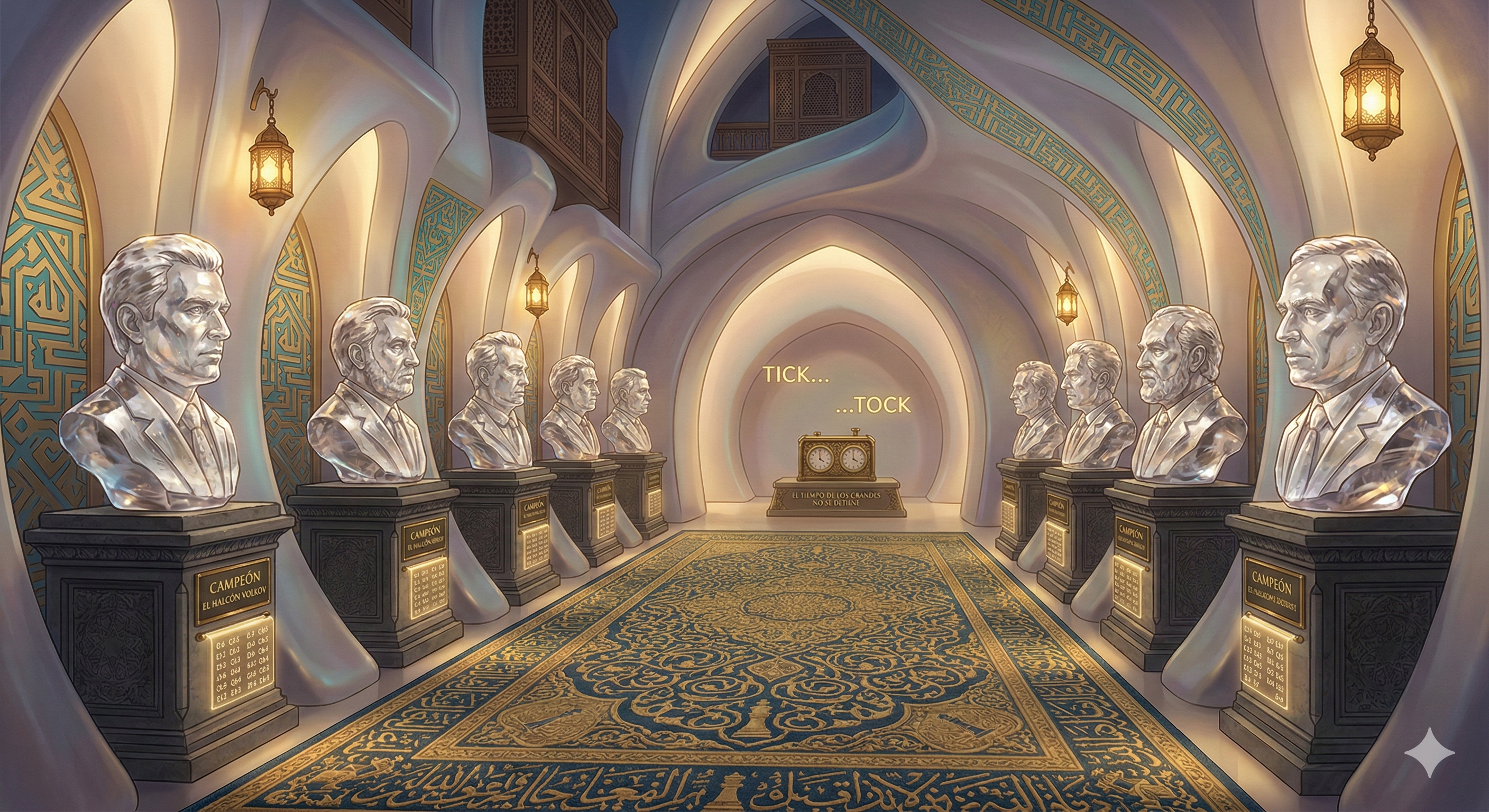
Located in a private section of the National Museum of Qatar, this is no ordinary corridor. It
is an underground vault designed with futuristic architecture and Arabic motifs.
Upon entering, you do not see paintings, but life-size busts of the champions carved in rock
crystal. Each bust has the final match with which they won the tournament engraved on the base.
The floor is covered with a carpet woven with gold threads that absorbs all sound. All you can
hear is the echo of an antique chess clock ticking away the seconds, symbolising that time never stops for the greats.
The Legend: Mikhail ‘The Falcon’ Volkov
Champion of the 1987 and 1991 editions (he is the only person to have won the Skyline Blitz twice in a row).
He was known for playing ‘psychological chess’. It is said that in the 1991 final in
Doha, he did not look at the board once during the last 10 moves; he simply stared into
his opponent's eyes until he collapsed under the pressure.
His bust in the Hall of Fame has a unique feature: it is the only one with a real chess
piece (an ebony knight) embedded in the glass hand.
Volkov disappeared from the public eye after his second victory, leaving a famous
phrase in the tournament's guest book: ‘In Doha, I found the perfect move, and after
perfection, the game no longer makes sense.’